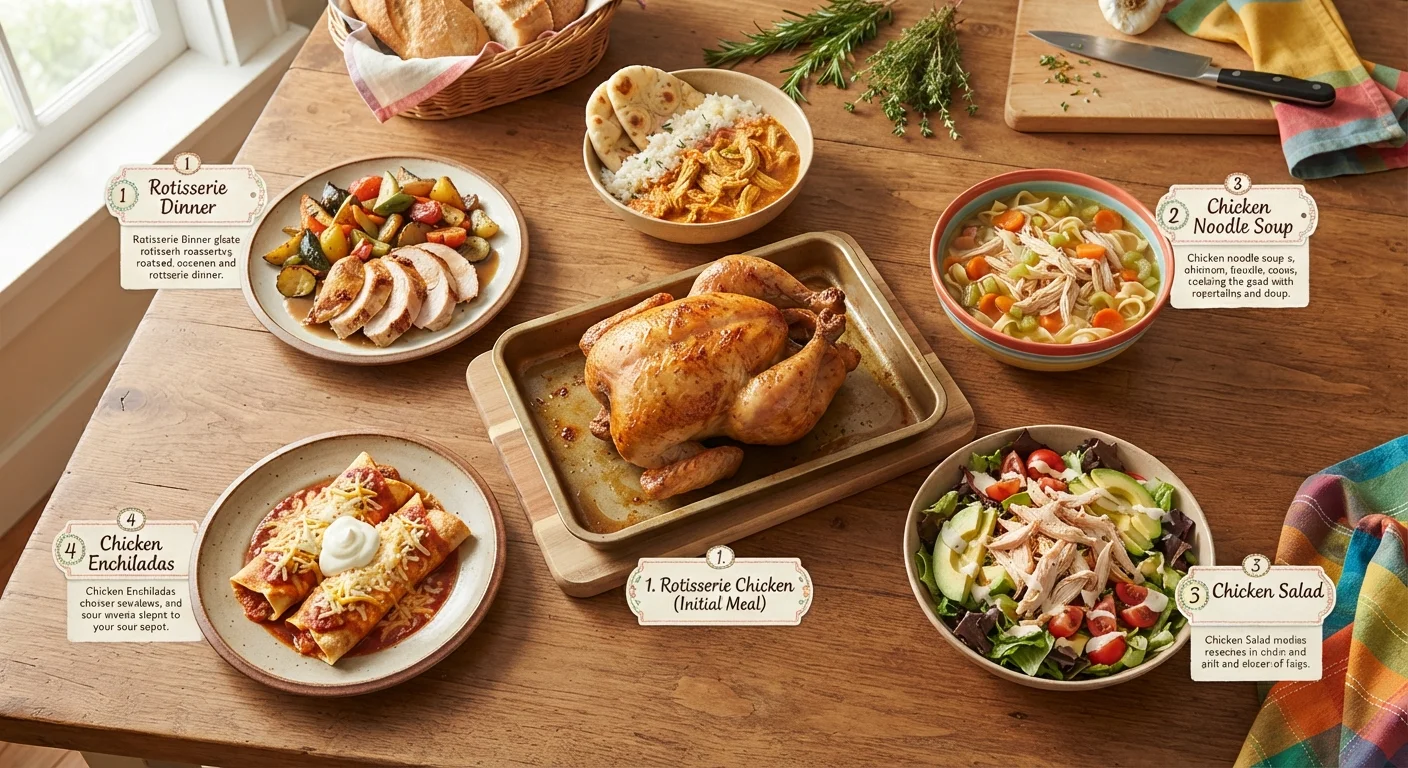
A pre-cooked rotisserie chicken from a grocery store typically runs a few dollars, roughly $6 to $7 at many stores, and delivers not just one convenient dinner but the raw material for several genuinely different meals, if the meat is shredded and portioned right away rather than eaten straight through in one or two nights. Households that plan for this stretch consistently report turning a single chicken purchase into three to five separate meals across the week.
This guide is independently written and is not affiliated with USDA, OPM, or the official federal Feds Feed Families campaign.
Meal One: Serve It Straight, Zero Extra Cooking
The most obvious first meal is simply serving the chicken as-is, sliced or pulled apart, alongside a couple of simple sides like mashed potatoes, rice, or a quick salad. This first night requires essentially no additional cooking, making it a natural choice for the same night the chicken is purchased.
Shred It Immediately, Not Right Before You Need It
- Meal One: Serve It Straight, Zero Extra Cooking
- Shred It Immediately, Not Right Before You Need It
- Meal Two: A Pasta Bake or Casserole
- Meal Three: Tacos, Quesadillas, or a Rice Bowl
- Meal Four: Soup, Using the Part Most People Throw Away
- Meal Five: Chicken Salad or Sandwiches for Lunch
- Freezing What You Won't Use This Week
- Why This Beats Cooking a Whole Chicken From Scratch, Sometimes
- FAQ
- How many meals can one rotisserie chicken realistically provide?
- What should I do with the leftover chicken carcass?
- Should I shred the chicken right away or leave it whole in the fridge?
- Is a store-bought rotisserie chicken actually cheaper than cooking a raw one at home?
Rather than leaving the remaining chicken whole in the refrigerator, shredding or dicing all the leftover meat right after the first meal and dividing it into separate containers makes it far easier to grab exactly the amount needed for each subsequent recipe throughout the week, and reduces the temptation to eat through the whole bird in one sitting simply because it's sitting there intact.
Meal Two: A Pasta Bake or Casserole
Shredded chicken folded into a simple pasta bake with a basic sauce and whatever cheese is on hand turns a modest portion of chicken into a filling, family-sized second meal, and casseroles freeze and reheat particularly well if there's more chicken left over than one meal's worth requires.
-
Budget Grocery Lists by Region: Adjusting for Local Prices
Meal Three: Tacos, Quesadillas, or a Rice Bowl
A smaller portion of shredded chicken goes a long way in tacos, quesadillas, or a simple rice bowl with beans and vegetables, since these formats naturally stretch a modest amount of protein across multiple servings by pairing it with inexpensive bulk ingredients like rice, tortillas, or beans.
Meal Four: Soup, Using the Part Most People Throw Away
The chicken carcass, the bones and skin left over after all the meat has been removed, can be simmered with water, onion, carrot, and celery for an hour or more to produce a genuinely flavorful homemade broth, which then becomes the base for a chicken noodle or vegetable soup using any remaining scraps of meat. Many households throw the carcass away without realizing it's effectively a second, free ingredient hiding in what looks like kitchen waste.
Recommended Articles
 BUDGETING MEAL PLANNING
 BUDGETING MEAL PLANNING
 BUDGETING MEAL PLANNING
 BUDGETING MEAL PLANNING
Meal Five: Chicken Salad or Sandwiches for Lunch
A final small portion of chicken mixed with a simple dressing makes an easy chicken salad for sandwiches or crackers, stretching the very last bit of meat into a lunch option for one or more days, often using ingredients like mayonnaise and celery that are already on hand from other meals during the week.
Freezing What You Won't Use This Week
If a single chicken produces more meat than a household can realistically use within a few days, portioning the extra into one- or two-cup freezer bags, labeled with the date, preserves it for a future week's meal without any of it going to waste, effectively extending the value of a single grocery purchase even further than a single week's planning would suggest.
Why This Beats Cooking a Whole Chicken From Scratch, Sometimes
While roasting a raw whole chicken at home is generally the cheapest option per pound, a store-bought rotisserie chicken is often priced close to, or sometimes even below, the cost of buying and cooking a raw chicken of similar size, once the value of the seasoning, cooking time, and convenience is factored in, making it a genuinely reasonable budget choice rather than simply a convenience splurge.
Read More Articals
FAQ
How many meals can one rotisserie chicken realistically provide?
Households that plan ahead and shred the meat immediately commonly stretch a single chicken into three to five separate meals across the week, especially when the carcass is used to make broth.
What should I do with the leftover chicken carcass?
Simmer it with water, onion, carrot, and celery for an hour or more to make a homemade broth, which becomes the base for a soup using any remaining scraps of meat, rather than throwing it away.
Should I shred the chicken right away or leave it whole in the fridge?
Shredding it immediately and dividing it into portioned containers makes it easier to grab exactly what's needed for each recipe and reduces the temptation to eat through the whole bird at once.
Is a store-bought rotisserie chicken actually cheaper than cooking a raw one at home?
Not always cheaper per pound than a raw chicken, but often close in price once seasoning and cooking time are factored in, making it a reasonable budget choice rather than purely a convenience splurge.
Sources: General budget cooking guidance from Budget Bytes, Thriving Home, and Kylee Cooks on rotisserie chicken meal stretching.