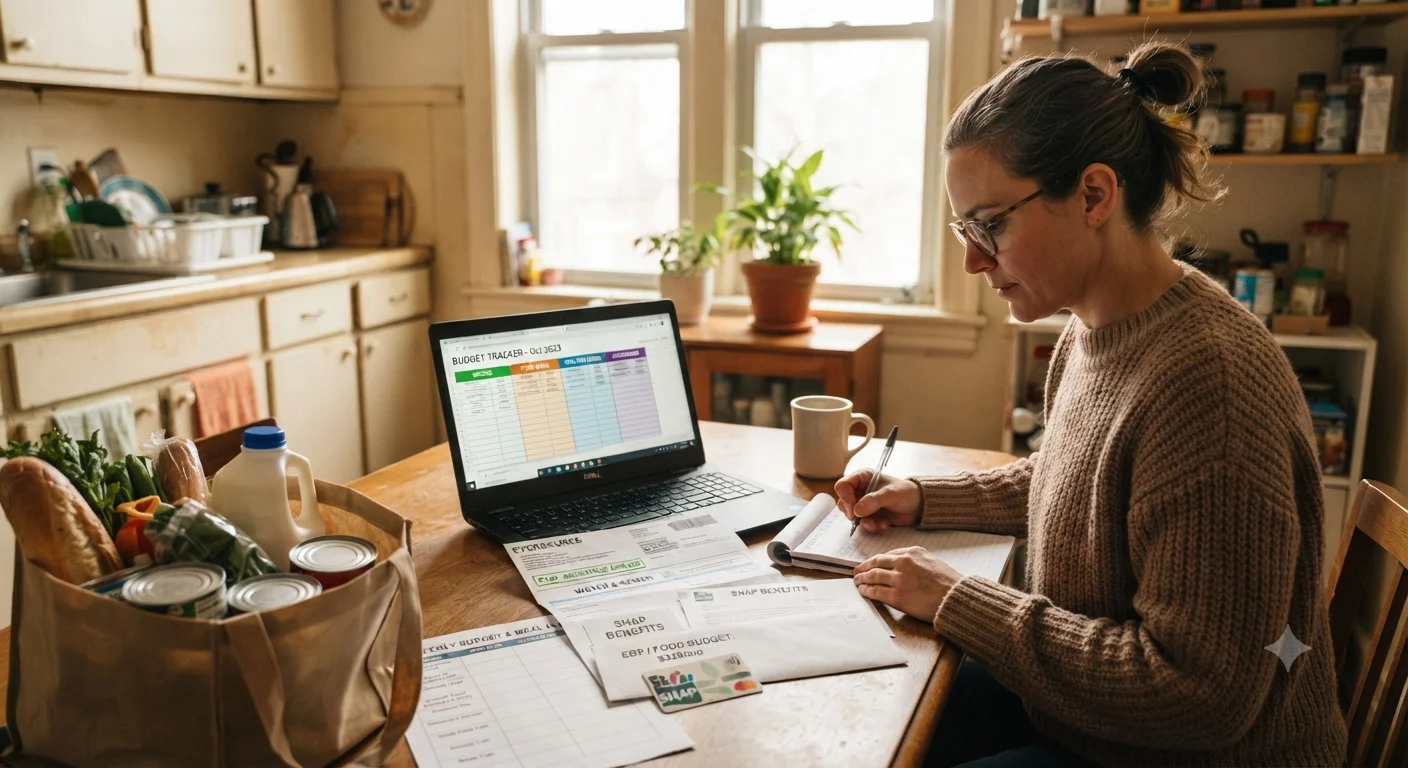
A high winter heating bill or summer cooling bill can quietly consume money that would otherwise go toward groceries, since most households pull from the same limited monthly income to cover both, and utility assistance programs like LIHEAP exist specifically to relieve that pressure by covering part or all of an energy bill directly, indirectly protecting whatever's left for food.
This guide is independently written and is not affiliated with USDA, OPM, or the official federal Feds Feed Families campaign.
Why Utility Costs Compete Directly With Food Spending
For a household on a fixed or limited income, rent and utilities are generally treated as non-negotiable, paid first regardless of what's left over, which means an unusually high utility bill in a particularly hot or cold month often gets absorbed by cutting whatever budget category has the most flexibility, and for many families, that's groceries. This dynamic is part of why utility assistance programs, despite not being food programs themselves, have a real, measurable effect on food security.
LIHEAP as the Primary Utility Assistance Program
- Why Utility Costs Compete Directly With Food Spending
- LIHEAP as the Primary Utility Assistance Program
- Automatic Eligibility Through SNAP
- How the SNAP Shelter Deduction Connects to Utility Costs
- Crisis Assistance When a Bill Is Already Overdue
- Weatherization as a Longer-Term Solution
- Building Utility Assistance Into an Annual Budget Plan
- FAQ
- How does utility assistance actually help with a food budget?
- Does receiving SNAP make it easier to get LIHEAP?
- Does a high utility bill affect my SNAP benefit amount?
- When is the best time to apply for LIHEAP?
The Low Income Home Energy Assistance Program provides a grant, typically ranging from a few hundred to around a thousand dollars depending on household size, income, and fuel type, paid directly to a household's utility provider to help cover heating or cooling costs. Because LIHEAP funds go straight to the utility company rather than to the household as cash, the benefit is specifically protected from being redirected elsewhere, which is part of why it reliably frees up other household income, including money that would otherwise go toward that same bill, for groceries and other needs instead.
Automatic Eligibility Through SNAP
In most states, households already receiving SNAP are automatically or more easily eligible for LIHEAP, since both programs are designed around similar income thresholds and the same underlying population of financially stretched households. Bringing a recent SNAP award letter to a LIHEAP appointment can significantly streamline the application, since it often eliminates the need for separate income documentation.
How the SNAP Shelter Deduction Connects to Utility Costs
SNAP's own benefit calculation includes a shelter deduction that accounts for housing and utility costs above a certain threshold of a household's income, meaning a genuinely high utility bill can, in a somewhat separate mechanism, also increase a household's SNAP benefit directly through this deduction. Reporting accurate, documented utility costs on a SNAP application, rather than leaving this section incomplete, ensures a household receives the full deduction it's entitled to, which can meaningfully affect the final SNAP benefit amount.
Recommended Articles
 GOVERNMENT ASSISTANCE GUIDES
 GOVERNMENT ASSISTANCE GUIDES
 GOVERNMENT ASSISTANCE GUIDES
 GOVERNMENT ASSISTANCE GUIDES
Crisis Assistance When a Bill Is Already Overdue
If a utility bill has already gone unpaid to the point of an active shutoff notice, LIHEAP's crisis component is specifically designed to respond quickly, often within 18 to 48 hours under federal guidance, rather than following the standard, slower application timeline. Reaching out before a shutoff actually happens, rather than after, generally gives a household more options and a faster resolution.
Weatherization as a Longer-Term Solution
Beyond one-time bill assistance, some LIHEAP programs also fund weatherization services, such as improved insulation or furnace repair, aimed at permanently reducing a household's future energy costs rather than only addressing a single month's bill. A household that qualifies for both direct bill assistance and weatherization support can see a lasting reduction in monthly utility costs, freeing up more of the ongoing budget for food and other needs well beyond the immediate assistance period.
Building Utility Assistance Into an Annual Budget Plan
Because LIHEAP has a defined application window that typically opens each fall, applying proactively as soon as the window opens, rather than waiting until a bill becomes unmanageable, is a more reliable strategy than treating it purely as a crisis-response tool. A household that applies early and receives a grant before winter starts generally sees a more predictable, protected grocery budget throughout the season than one that waits until a bill is already overdue.
Read More Articals
FAQ
How does utility assistance actually help with a food budget?
By covering part or all of a household's energy bill directly with the utility provider, LIHEAP frees up other income that would otherwise be diverted from groceries to cover an unusually high heating or cooling bill.
Does receiving SNAP make it easier to get LIHEAP?
Yes, in most states. Households already receiving SNAP are often automatically or more easily eligible for LIHEAP, since both programs use similar income thresholds.
Does a high utility bill affect my SNAP benefit amount?
It can, through SNAP's excess shelter deduction, which accounts for housing and utility costs above a certain share of a household's income and can increase the final SNAP benefit when accurately reported.
When is the best time to apply for LIHEAP?
As early as possible once the application window opens, typically in the fall, rather than waiting until a bill becomes unmanageable, since applying proactively generally leads to a more predictable and protected household budget.
Sources: U.S. Department of Health and Human Services LIHEAP guidance, USDA Food and Nutrition Administration SNAP shelter deduction guidance.