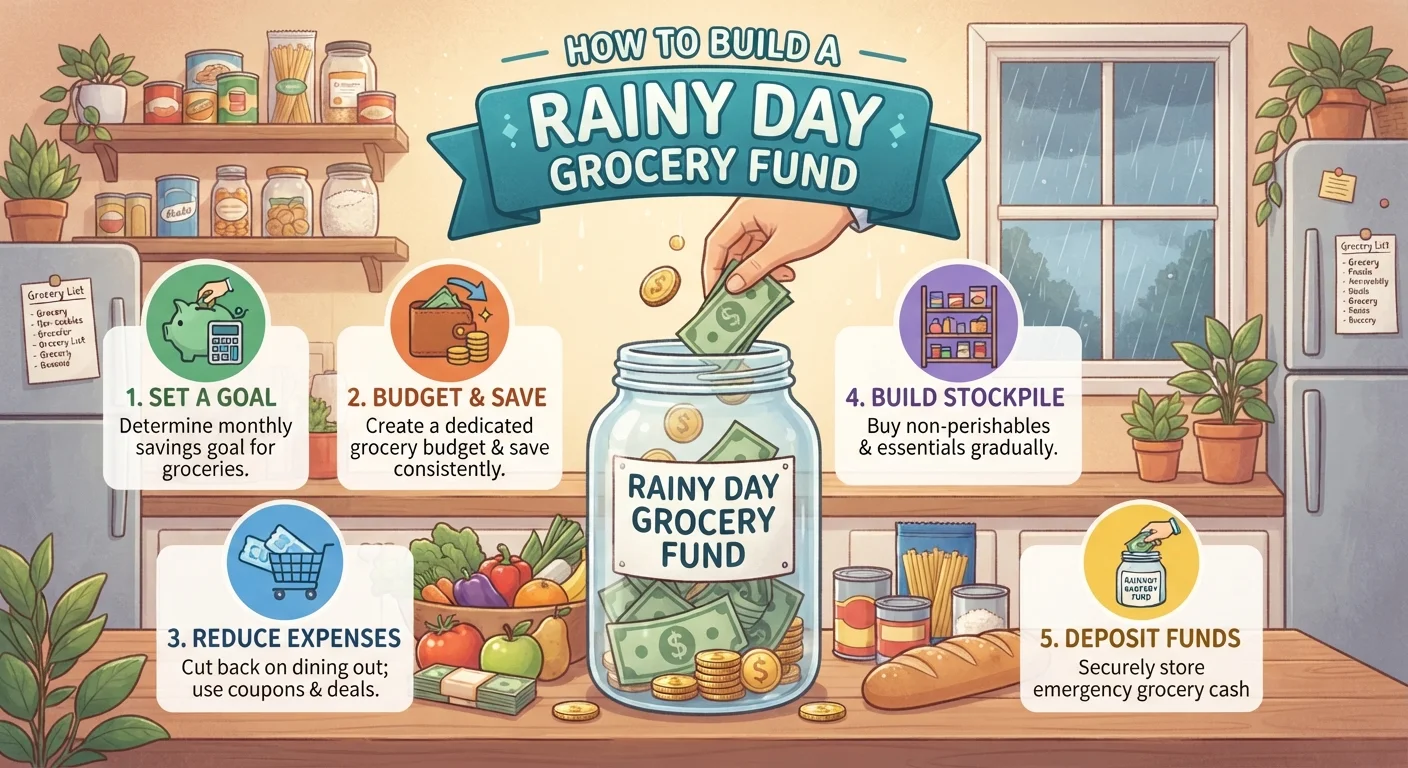
According to the Federal Reserve, roughly one-third of Americans cannot cover a $400 emergency expense using cash, savings, or a credit card that would be paid off in full the following month, which means general financial advice recommending three to six months of expenses saved is genuinely out of reach for many households right now. A smaller, food-specific rainy day fund, built to cover just one or two unexpected weeks of groceries, is a considerably more realistic and achievable goal.
This guide is independently written and is not affiliated with USDA, OPM, or the official federal Feds Feed Families campaign.
Why a Food-Specific Fund Is Different From a General Emergency Fund
A traditional emergency fund is meant to cover a major disruption, a job loss, a medical bill, a car repair, and building one to the commonly recommended three-to-six-month level is a long-term goal that can feel discouraging to even start given how far away it can seem. A rainy day grocery fund is a narrower, more specific goal: a small buffer set aside specifically to cover a week or two of groceries if a paycheck is delayed, a SNAP deposit is disrupted, or an unexpected expense elsewhere in the budget temporarily eats into money that would normally go toward food.
Setting a Realistic, Small Target
- Why a Food-Specific Fund Is Different From a General Emergency Fund
- Setting a Realistic, Small Target
- Building It a Few Dollars at a Time
- Using Windfalls Specifically for This Fund
- Where to Keep It
- When to Actually Use It
- Replenishing It After Use
- This Complements, Rather Than Replaces, Other Support
- FAQ
- Why build a separate grocery fund instead of a general emergency fund?
- How much should a rainy day grocery fund contain?
- What's a low-effort way to build this fund gradually?
- Should this fund replace applying for SNAP or food bank help?
Rather than an intimidating multi-month goal, a food-specific fund can start with a target as modest as $50 to $100, roughly what a careful household spends on groceries in a single week using budget-conscious staples. Reaching even this smaller amount provides genuine, practical protection against a short-term gap, without requiring the kind of sustained, large-scale saving that a full emergency fund demands.
Building It a Few Dollars at a Time
Setting aside even $5 or $10 from any grocery trip where spending came in under the planned budget, rather than treating that surplus as extra to spend elsewhere, is a low-friction way to gradually build this fund without requiring a separate, dedicated savings effort each month. Over several months, these small surpluses genuinely add up to a meaningful buffer.
Using Windfalls Specifically for This Fund
Directing an unexpected windfall, a tax refund, a small bonus, cash from selling an unused item, specifically toward this food-specific fund rather than letting it disappear into general spending is a practical way to build the buffer faster than steady small contributions alone would allow.
Recommended Articles
 BUDGETING MEAL PLANNING
 BUDGETING MEAL PLANNING
 BUDGETING MEAL PLANNING
 BUDGETING MEAL PLANNING
Where to Keep It
Keeping a rainy day grocery fund in a separate savings account, distinct from a checking account used for everyday spending, makes it meaningfully less tempting to dip into for a non-emergency purchase, since the extra step of transferring money back creates a small but genuinely useful pause before spending it.
When to Actually Use It
Being clear in advance about what genuinely counts as a reason to use this fund, a delayed paycheck, an unexpected bill that temporarily squeezes the grocery budget, a SNAP deposit disruption, rather than a routine tight week that a normal budget adjustment could handle, helps preserve the fund's actual purpose rather than letting it get depleted by everyday budget pressure.
Replenishing It After Use
If the fund does get used, treating replenishment as a priority, even in small increments, the next time the budget allows, keeps this protection genuinely available going forward rather than a one-time buffer that quietly disappears the first time it's actually needed.
This Complements, Rather Than Replaces, Other Support
A rainy day grocery fund is a helpful personal buffer, but it isn't meant to replace or compete with formal food assistance programs like SNAP or a local food bank during a genuinely significant gap. If a household's food situation is at real risk, reaching out to SNAP, a food bank, or 211 remains the appropriate first step, with a personal rainy day fund functioning as one additional layer of support rather than the sole safety net.
Read More Articals
FAQ
Why build a separate grocery fund instead of a general emergency fund?
A general emergency fund covering months of expenses is out of reach for many households, and a smaller, food-specific goal, covering just one or two weeks of groceries, is considerably more realistic and achievable to actually reach.
How much should a rainy day grocery fund contain?
A modest starting target of $50 to $100, roughly a week's worth of budget-conscious grocery spending, is a reasonable and achievable goal, rather than a large, discouraging multi-month figure.
What's a low-effort way to build this fund gradually?
Setting aside any small surplus from a grocery trip that came in under budget, rather than spending it elsewhere, is a practical, low-friction way to build the fund over time.
Should this fund replace applying for SNAP or food bank help?
No. A rainy day grocery fund is one additional layer of personal protection, not a replacement for formal food assistance programs during a genuinely significant gap.
Sources: Federal Reserve consumer financial resilience data, general emergency and rainy day fund savings principles adapted for food-specific budgeting.