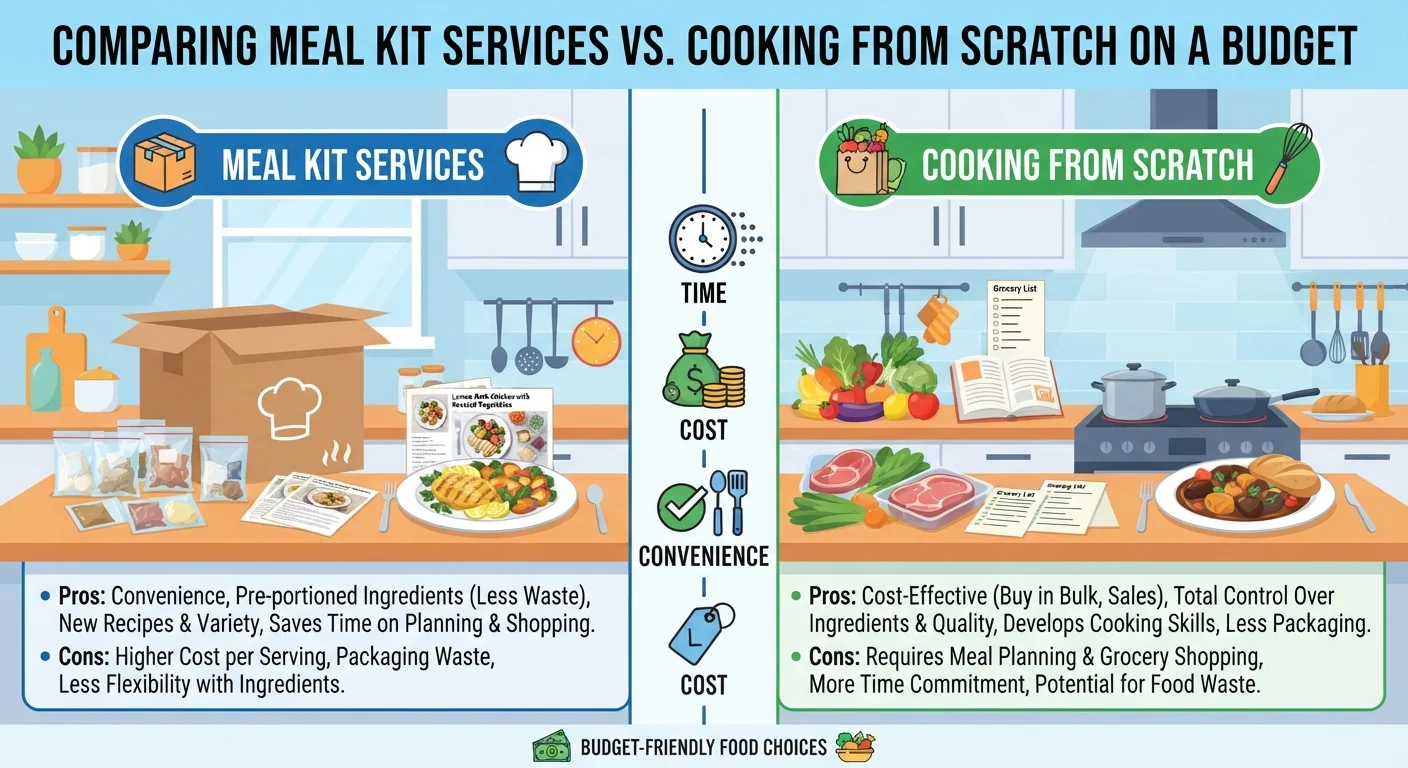
Meal kit delivery services typically run $5 to $15 per serving depending on the specific service and plan, while cooking the same style of meal entirely from scratch generally costs $3 to $10 per serving, meaning nearly every independent cost analysis agrees meal kits carry a real premium over buying groceries and cooking yourself. That said, meal kits consistently cost meaningfully less than takeout or restaurant delivery, which commonly runs $15 to $40 or more per serving once fees and tips are included, making the more honest comparison for many households "meal kit vs. takeout," not "meal kit vs. from scratch."
This guide is independently written and is not affiliated with USDA, OPM, or the official federal Feds Feed Families campaign. It is not sponsored by or affiliated with any specific meal kit service.
The Honest Cost Comparison
Budget-tier meal kit services like EveryPlate and Dinnerly start around $5 to $6 per serving, while more premium services with pre-chopped, pre-prepped ingredients designed for faster cooking commonly run $11 to $15 per serving once shipping is included. Scratch cooking a comparable meal, by contrast, typically lands in the $3 to $10 per serving range depending on the specific dish and ingredients, meaning even the cheapest meal kit tier generally costs somewhat more than the equivalent home-cooked version.
What a Meal Kit Actually Buys, Beyond the Food
- The Honest Cost Comparison
- What a Meal Kit Actually Buys, Beyond the Food
- Where the Real Savings Show Up
- Food Waste Is a Real, Often Overlooked Factor
- Why Meal Kits Rarely Beat a Genuinely Tight SNAP Budget
- When a Meal Kit Might Genuinely Make Sense
- Reading Meal Kit Pricing Carefully
- FAQ
- Are meal kits actually cheaper than cooking from scratch?
- Are meal kits cheaper than takeout?
- Can SNAP benefits be used to pay for a meal kit subscription?
- When might a meal kit genuinely make financial sense?
A meal kit's premium over scratch cooking isn't simply markup, it reflects genuine value in specific areas: pre-portioned ingredients that reduce food waste, recipe planning already done, and, for the more premium pre-chopped services, a meaningful reduction in actual hands-on cooking time. For a household genuinely replacing regular takeout orders with a meal kit rather than replacing home cooking, this premium can represent real net savings rather than added cost.
Where the Real Savings Show Up
The most consistent, credible finding across independent cost breakdowns is that meal kits save money specifically when they replace takeout or delivery, not when they replace already-planned scratch cooking. Replacing several weekly takeout orders with a budget-tier meal kit service has been estimated to save meaningfully on a monthly basis, since the gap between a $6 meal kit serving and an $18 to $20 takeout order with delivery fees and a tip is considerably larger than the gap between that same meal kit and cooking from scratch.
Food Waste Is a Real, Often Overlooked Factor
Because a meal kit sends exactly the portions needed for a specific recipe, it can meaningfully reduce the food waste that comes from buying a full-size ingredient, like a bunch of fresh herbs or a specific vegetable, and using only a portion before the rest spoils, a genuine cost with scratch cooking that's easy to overlook when comparing sticker prices alone. Estimates suggest a substantial share of household food purchases go to waste, so this factor is worth weighing, not just the per-serving price tag.
Recommended Articles
 BUDGETING MEAL PLANNING
 BUDGETING MEAL PLANNING
 BUDGETING MEAL PLANNING
 BUDGETING MEAL PLANNING
Why Meal Kits Rarely Beat a Genuinely Tight SNAP Budget
For a household managing a fixed, limited SNAP benefit specifically, meal kits are almost never the more cost-effective option, since even the cheapest tier runs meaningfully above what a carefully planned SNAP grocery budget, built around staples like rice, beans, and seasonal produce, can achieve per serving. Meal kits are also generally not purchasable with SNAP benefits, since most services require a separate subscription payment rather than functioning as a standard eligible grocery purchase.
When a Meal Kit Might Genuinely Make Sense
For a household with some financial flexibility that's specifically trying to reduce a habit of ordering takeout several times a week, a budget-tier meal kit can be a reasonable middle step, both financially and in terms of building toward more regular home cooking, rather than an all-or-nothing jump straight to full scratch cooking from a takeout-heavy routine.
Reading Meal Kit Pricing Carefully
It's worth knowing that many meal kit services advertise a steep introductory discount that doesn't reflect the ongoing price once the promotional period ends, sometimes representing 40 to 60 percent off in the first week before landing at full retail pricing within a month. Budgeting based on the post-promotional, ongoing rate, rather than the eye-catching first-box price, gives a far more accurate picture of the real long-term cost.
Read More Articals
FAQ
Are meal kits actually cheaper than cooking from scratch?
Generally no. Nearly every independent 2026 cost analysis finds meal kits run $5 to $15 per serving, while cooking the same meal from scratch typically costs $3 to $10 per serving.
Are meal kits cheaper than takeout?
Yes, consistently. Meal kits at $5 to $15 per serving are meaningfully cheaper than typical takeout or restaurant delivery, which commonly runs $15 to $40 or more per serving once fees and tips are included.
Can SNAP benefits be used to pay for a meal kit subscription?
Generally no. Most meal kit services require a separate subscription payment rather than functioning as a standard SNAP-eligible grocery purchase.
When might a meal kit genuinely make financial sense?
When it's specifically replacing frequent takeout or restaurant delivery orders rather than replacing already-planned scratch cooking, since the savings gap against takeout is considerably larger than the gap against home cooking.
Sources: CNET meal kit value analysis, independent 2026 meal delivery cost breakdowns cross-referenced against USDA household food cost data.